


Blackjack Terms and Player Actions Explained

Blackjack terminology is used to define the dealer’s hand, your own cards and how a round will end. As for blackjack player actions, these are the moves you put to those cards: whether to take one more, hold your total, up the wager or part with a pair. The only way to stay with the game is to have a hold of both, though the rules at the table will put limits on what can be done.
Blackjack Basics: Goal and Card Values
The objective is to beat the dealer without going over 21. A higher total works, as does the dealer going over while your hand stands. The other players’ hands have no bearing on your outcome.
For the 2 to 10 the face value stands. A king, queen or jack is 10, an ace is 1 or 11. An ace and 7 is 18, but add in a 9 and the ace is down to 1 for 17.
Essential Blackjack Terms
You can make the lingo easier to remember by tying the words to what is on the table, your hand, the dealer and the probable outcome.
Hand Types: Hard, Soft, Pair and Blackjack
If an ace is not being counted as 11 it is a hard hand, like a 10–7 for hard 17. A soft hand has an ace as 11, making an ace–6 a soft 17. Put a 9 on top and it turns into hard 16.
A pair is two of the same rank, say 8–8. Some tables let you separate different ten-value cards as well.

A natural blackjack is an ace and a ten-value card in the first two and it will as a rule trump a 21 made up of three cards. If you are dealt an ace and ten following a split that is normally viewed as an unremarkable 21.
Dealer and Table Terms
The dealer’s showing card is the upcard. The hole card is dealt face down, with some versions holding off on the second card. The shoe is where the cards come from, frequently from multiple decks. There are minimum and maximum limits on the table. See if side bets have their own limits before you put your chips down.
Outcome Terms: Bust, Push and Even Money
Going over 21 is a bust and your main bet is gone right then and there, dealer bust or not. A push is a tie that puts your stake back; two naturals will normally push.
Even money is a 1:1 profit. Win a €10 bet and you are given another €10 plus your original. There may be an offer to call it even on a natural at 1:1 when the dealer shows an ace. Do not take it for granted that the proposition is identical every time the term is bandied about; see what the payout is.
Blackjack Player Actions Explained
Hit and stand are the first calls to make. The rest might call for an extra bet or be open to you only before you draw. Have a look at the buttons before it is your turn.
Hit
This is a request for one more card. Draw a 4 with a 9–5 and you have 18. You can typically hit again so long as you are under 21 but any additional card may alter things. Over 21 and the hand is done.
Stand
You are content with your total and stop making decisions on the hand to let the dealer have his way. Standing is not a guarantee of winning since the dealer can still come up with a better number.
Double Down
To double down in blackjack means putting down a further wager to match your original for a single additional card. Your €10 is now €20. It is mostly for the first two cards and some tables have restrictions on the totals. After the card is in you cannot hit that hand any more.
Split
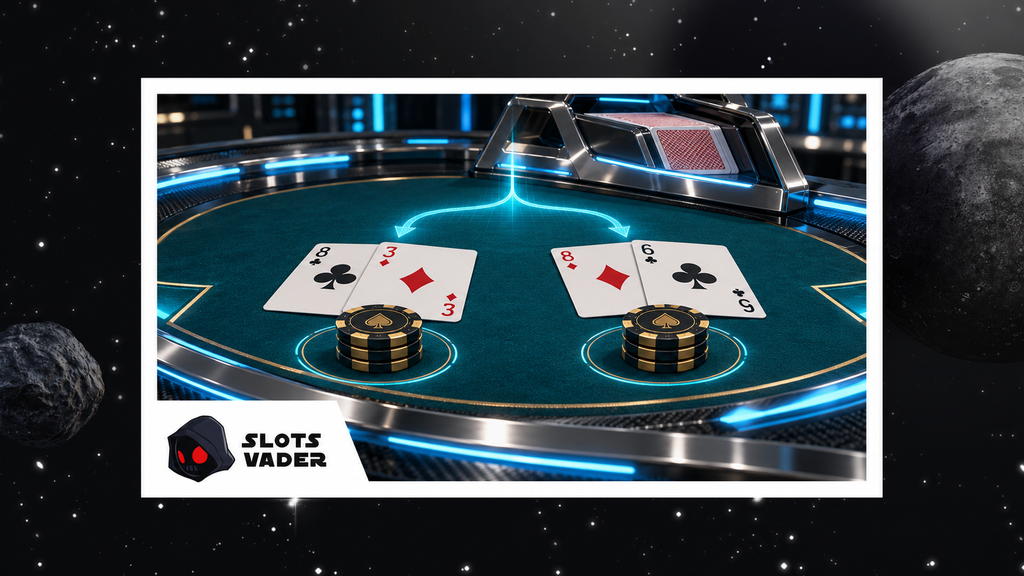
When you split in blackjack, you divide an acceptable pair and put down an equal sum for the new hand. An 8–8 with a €10 stake becomes two hands of €10. They are dealt another card and settled on their own. When aces are split, each is typically dealt but one card; whether to resplit or double is a matter for the table.
Surrender
If the option is there, blackjack surrender allows you to put an end to the hand and forfeit half of what was put down. On a €10 wager that means losing €5 and walking away with the rest. It is a call made on the first two cards for the most part. The distinction between early and late surrender comes into play if the dealer has a chance at blackjack.
Insurance
An ace from the dealer will bring up the offer of insurance as a side bet. One can put down as much as half the original stake and stand to make 2:1 should the dealer have blackjack. Failing that, the bet is lost. The main hand is its own affair and is settled on its own terms; insurance does not cover all losses.
Blackjack Actions at a Glance
The following is a summary of how blackjack player actions have an immediate effect under common rules, though the game’s instructions are final.
| Action | What happens | Extra stake? |
| Hit | Another card is dealt | No |
| Stand | Decisions on the hand are done | No |
| Double down | One last card is given | As a rule, the same as the original bet |
| Split | Two hands are made | Same as the original bet |
| Surrender | Half is lost and the hand is over | No |
| Insurance | A wager the dealer has blackjack | Up to half of what was staked |
At a real table one uses hand signals. Online the labelled controls do the job, so check the active hand before confirming.
How a Round Plays Out: Step-by-Step Example

Take a standard table with 1:1 wins and a €10 opening bet.
- You are dealt 9–7 for a hard 16. The dealer has a 10 showing.
- A Hit is called and a 4 comes in, making 20.
- Then Stand is selected to close out the turn with no further money put in.
- The dealer reveals a 7 under the 10 for a hard 17 and stands.
- With 20 to 17 you are the winner and get back the €10 stake and another €10 in profit.
This is just to illustrate the mechanics of the controls, not to forecast the next card. A ten-value card at the second step would have been a bust.
Rule Variations That Change Your Options
Minor changes in the rules can alter the payout and your choices. Have a look before you sit down:
- Soft 17: S17 means the dealer stands, H17 means he hits.
- Doubling: the rules on what totals are allowed and doubling after a split are not uniform.
- Splitting: be aware of any limits on resplitting or split aces.
- Surrender: early surrender is possible before the dealer is ruled out of having blackjack; late surrender only when he does not.
- Payout: a natural on €10 is worth €15 at 3:2 but only €12 at 6:5.
Those are the profit figures, the stake comes back on top. All else being equal, a lower blackjack payout gives the house a better edge.
When comparing blackjack games at Slotsvader, look for these details in each game’s rules panel before choosing a table. The names of the actions may be familiar, but whether you can double after splitting or surrender your first two cards depends on the version you open.
Blackjack Basic Strategy and Common Beginner Mistakes
Your hand, the dealer’s upcard and the rules at the table inform the decisions on a basic strategy chart. Make sure the chart is right for the deck count and soft-17 rule.
Mistakes are made by not differentiating soft and hard totals, or forgetting the extra cost of a split. Some take the dealer’s rules as their own. Insurance is a separate wager and should be judged as such.
The house edge is the casino’s average mathematical advantage over time, it is no guide to a single session. Even good calls can lose a hand. Do not let the outcome of the last round dictate your spending limit.
Playing Blackjack at Slotsvader
Open the rules and payout details for the game in question before you start at Slotsvader Online Casino. See what the minimum stake is and what actions are on offer.
RNG blackjack is software driven, live dealer is streamed. Adhere to the timer and the controls of the format. Should a button be unavailable, consult the rules instead of thinking it is a technical problem.
Once you have read the table with these blackjack terms in mind, set your limits on time and money and then make your bet.